Skip to content
YL

Yusong Leng

Senior AI/ML Engineer · Computer Vision & Full-Stack AI Products · Singapore

I take AI from research to products that real businesses run on.

first-attempt success, spinal needle placement
66% → 92%
AI scalp scans in production
24,000+
regulatory approvals, incl. the EU (MDR)
5

About me

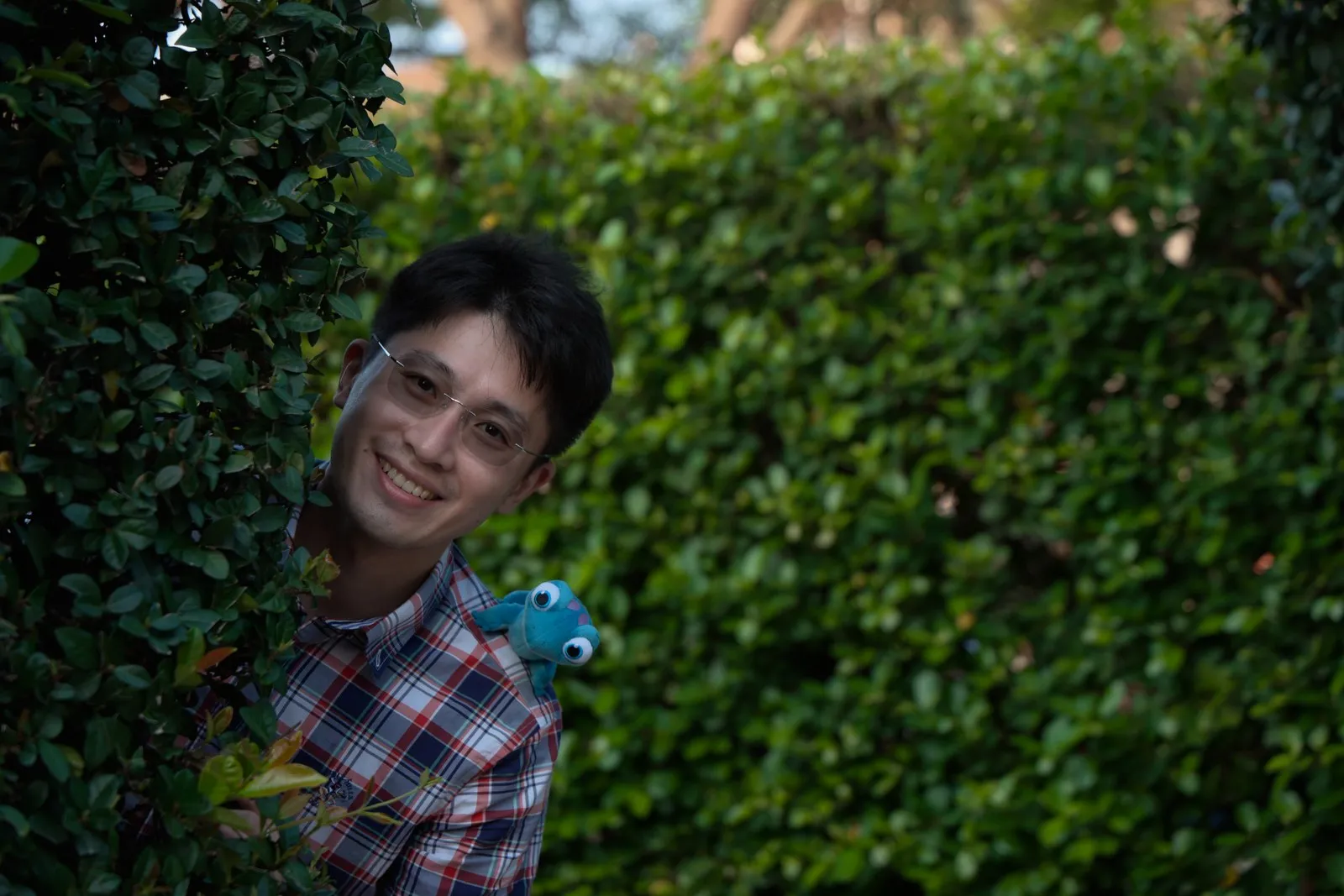
I'm originally from Harbin, in China's far northeast, but Singapore has been home for more than a decade. My wife and I both did our PhDs at NUS, became PRs, and moved into our first home here. We're settled for the long term.

Outside of work I'm usually behind a camera. I shoot with everything from a phone to a DSLR, a drone, even a Polaroid, and I cut a small vlog of every family trip, just to hold onto the moments.

I'm also a keen plant-grower, and that hobby escalated: my current side project, Orbot, is a biomimetic robot I'm building end to end that turns plants into interactive companions.

Yusong Leng

What I've built

uSINE

Real-time AI navigation for spinal punctures — a GPS for the spine

2018–present · HiCura Medical

Product page (opens in a new tab)

Business impact

first-attempt success (palpation → uSINE)
66% → 92%
first-attempt success, high-BMI patients (BMI > 30)
43% → 82%
markets with regulatory approval — EU MDR · SG · MY · TH · IN
EU + 4
  • First-attempt failures cut from ~1 in 3 to fewer than 1 in 10 — patients spared repeat needle passes.
  • In clinical use at 5 leading Singapore hospitals.

Problem

Spinal anaesthesia is traditionally a blind procedure: the clinician finds the right gap between two lumbar vertebrae by feeling the patient's back (manual palpation), then judges the needle's entry point and angle by touch alone. Roughly 1 in 3 first attempts fails — repeat punctures, complications, wasted clinical time. Ultrasound is the recommended remedy, but reading spinal ultrasound is genuinely difficult. uSINE is the AI guidance layer in between: it identifies spinal landmarks in real time and guides needle placement.

Approach

  • Moves with the clinician: adoption drove the design — clinician interviews set the direction, the UI was co-designed with them and a professional UX team, and the tracking algorithm was fully redesigned, even under time and cost pressure, so clinicians could scan the way they already do.
  • Engineered for the procedure room, not the lab: runs alongside the ultrasound machines hospitals already own, with deep algorithm optimization delivering real-time performance on standard off-the-shelf CPU laptops — lower cost, portable, nothing to replace, and nothing exotic to install or maintain.
  • Built to be audited: extensive testing and validation — including clinical validation across 200+ patients — thorough documentation, and Git-based traceability that keeps every change auditable on the path to multi-market regulatory approval.

Tech stack

Real-time computer vision on off-the-shelf CPU laptops — OpenCV, Cython, ONNX, PyQt

My role

CTO & co-founder — led the full prototype-to-production rebuild across algorithms, backend, and UI.

TrichoTrack

Standardized AI scalp diagnosis, run as a business at production scale

Business impact

scans across 6 outlets in 15 months
24,000+
infrastructure cost per scan
~S$0.87
customers served
2,000+
  • Virtually zero downtime across 15 months of production.
  • Objective scalp measurement in seconds by non-expert staff — standardized diagnosis across every outlet.
  • Adding an outlet costs near zero — SaaS operating leverage built in.

Problem

A hair-care chain wanted every customer to get the same quality of scalp consultation at every outlet — hard when diagnosis depends on a handful of scarce trichologists. Objective, quantitative scalp diagnosis — grounded in hair and follicle density — is impractical to do manually, so in practice it was either skipped or bottlenecked on those few experts.

Approach

  • Explainable hybrid AI: deep learning detects only what a human can verify with their own eyes — hair strands, follicles, dandruff, pimples — and a rule-based expert system turns those observations into the diagnosis. Trust is what drives adoption: staff and customers can always see why.
  • Improves with every scan: a large labeled dataset was out of reach upfront, so the team shipped a workable product first and let production data do the rest — each new scan feeds an MLOps loop of anonymization, cleaning, model-in-the-loop pre-labeling, human review, retraining, benchmarking, and release.
  • Built to run a business: multi-tenant architecture with role-based access control, hybrid subscription plus pay-per-use billing, and a CRM and analytics dashboard that outlet staff use in daily operations — delivered as a PWA: one app on every outlet PC and iPad.

Tech stack

Multi-tenant SaaS (FastAPI, PostgreSQL), React PWA client, PyTorch → ONNX, CVAT + W&B ML pipeline, Stripe & Twilio, Docker + CI/CD

My role

CEO & co-founder — took it from the first business conversation to production and 15 months of operations, leading a 5-person team.

Orbot (working name)

A biomimetic robot that turns houseplants into interactive companions

2025–present · Independent R&D

In active development — a private build, not yet released

  1. Sep 2025

    Hardware build starts

  2. Dec 2025

    Environmental sensing, live camera streaming, and data logging online

  3. Mar 2026

    Responsive, multilingual web app online; remote-piloted locomotion

  4. Jun 2026

    V1 prototype complete: time-lapse capture, battery safeguards, always-on deployment

  5. Today

    V2 iteration in progress

The concept

The name fuses Organism and robot: a companion robot exploring the middle ground between living things and machines. It watches over a plant's well-being and gives it a mobile, playful presence in the home — art and engineering in one build.

Approach

  • Agent-native development: the repo is structured for AI coding agents as day-to-day contributors — scoped instructions, path-scoped rules, and hooks that run a fail-fast quality gate after every edit, holding agent- and hand-written code to the same typed, tested, documented bar as my shipped products.
  • Strict separation of concerns: hardware drivers, assembly logic, the API service, and the web dashboard are cleanly layered, and backend and frontend share only one HTTP contract — each side develops and tests independently.
  • Cost-conscious product architecture: designed from day one to a consumer-viable cost point — standard off-the-shelf parts wherever practical, down to bearings and screws, with deliberate trade-offs across the hardware, electronics, and software stack.

Tech stack

Raspberry Pi · Python (Falcon ASGI) · SQLite · Vue 3 + Quasar · Autodesk Fusion (CAD) · 3D printing

My role

Solo builder — mechanical design and 3D printing, electronics, sensing and control, backend, and app: every layer is one person's work.

The detailed software and mechanical design remain private ahead of potential commercialization.

Where I've been

  1. 2018–present(ongoing)

    HiCura Medical — CTO & Co-Founder, now Technical Advisor

    Built uSINE, a real-time ultrasound spinal-navigation system — now regulatory-approved across the EU and four Asian markets. Co-founded HiCura, which earned Forbes Asia "100 to Watch" recognition and won the University Startup World Cup (2022).

    Medical AI · Computer vision · Regulatory

  2. 2021–2024

    Alvisual — CEO & Co-Founder

    Shipped TrichoTrack, a multi-tenant AI SaaS for scalp diagnostics — 24,000+ scans across 6 outlets over 15 months of production — leading a cross-functional team of five.

    AI SaaS · Product leadership · MLOps

  3. 2024–2025

    Anker — Senior Algorithm Manager

    Built Anker's Singapore team from scratch — hiring, mandate, and technical direction for a new regional AI group.

    Team building · AI strategy

  4. 2024–present(ongoing)

    carbonZAP — Advisory Board Member

    Part-time, non-executive advisory for a climate-tech startup applying AI to food loss and waste — guiding AI architecture, the technology roadmap, and AI hiring and mentorship.

    Advisory · Computer vision

  5. 2025–present(ongoing)

    Independent R&D — Full-stack robotics build

    Building Orbot, a biomimetic robot, end to end — mechanical design, electronics, sensing and control, backend, and app — while upskilling hands-on in LangChain and LangGraph.

    Robotics · GenAI · Full-stack

PhD, National University of Singapore · B.Eng Automation, Harbin Institute of Technology (Honors School) · 8 published papers

What drives me

Across clinical AI, production SaaS, and full-stack robotics work, the thread that keeps pulling me forward is the same: making AI useful under real-world constraints. Scarce data, modest hardware, strict validation, and non-technical users who need a reason to trust the system are not edge cases to me; they are the actual job. My definition of finished is not a model that performs well in isolation, but a system people can rely on in daily work. That's why I care about the whole path: how a solution is introduced, how users build confidence in it, how it's supported, what each unit of value costs to deliver, and how the next use case can build on what already works.

That same standard shapes what I want next: meaningful business problems, a strong engineering team, and hands-on depth in generative AI while carrying outcomes end to end. After years of owning every part of a company, I'm drawn less by title than by the quality of the work itself: clear direction, room to grow, and the chance to turn AI from promising capability into reliable operating practice. The founder habits stay with me: ownership, speed with discipline, and care for the people who depend on the system.

Ask me anything

This is a live GenAI build — a small language-model app built into this site, answering as me from a fact sheet I curated. Ask about my work, my projects, or what I'm looking for — in whatever language you prefer.

ask Yusongwarming up

The assistant comes online here shortly.

AI answers as Yusong — verify anything important with the human.

How this chat works & privacy

Answers are generated by a language model from a fact sheet Yusong curated — not typed live by the human. Questions are processed by a third-party model API and are never stored by this site — no accounts, no cookies, no chat logs kept here. Please don't include sensitive personal information.